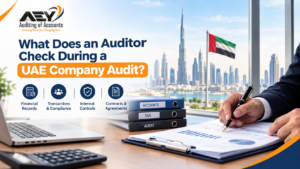
Before an audit begins, many business owners want to know exactly what the auditor will check. The answer depends on the engagement, but the auditor’s work generally involves examining financial information and supporting evidence relevant to the agreed scope.
An audit is not simply a quick review of the final profit figure. The auditor may look at individual accounts, supporting documents, reconciliations, significant transactions and relevant controls to obtain appropriate evidence.
What Areas Does an Auditor Commonly Review?
Revenue and Sales
Revenue is an important financial statement area. An auditor may review sales records, invoices, credit notes, customer balances and other supporting information. The work may also consider whether revenue is recorded in the appropriate period and whether significant or unusual transactions are properly supported.
Expenses and Purchases
Auditors may examine purchase invoices, expense records, approvals and supporting documents to understand whether expenses are properly recorded and classified.
Unusual or significant expenses may receive additional attention.
Bank Accounts and Cash
Bank statements and reconciliations can help an auditor compare recorded balances with external supporting information.
Old unreconciled items, unidentified transactions or unexplained differences can lead to additional questions.
Accounts Receivable
Customer balances may be reviewed through ageing schedules, supporting invoices, subsequent receipts or other appropriate procedures.
Old or disputed balances may require further explanation.
Accounts Payable
The auditor may review supplier balances, invoices, payment records and supporting schedules to understand whether liabilities are appropriately recorded.
Inventory
Where inventory is material to the business, auditors may review stock records, valuation information, movements and other supporting evidence relevant to the engagement. Differences between physical stock records and accounting information can require investigation.
Fixed Assets
Fixed asset records may be reviewed to support the existence, acquisition, disposal and accounting treatment of significant assets.
The auditor may consider the fixed asset register, invoices, depreciation schedules and disposal records.
Loans and Other Liabilities
Loan agreements, repayment schedules and other financing documents may be reviewed to support reported liabilities.
The auditor may also consider significant provisions or obligations that affect the financial statements.
Equity and Shareholder Transactions
Depending on the entity and audit scope, share capital, shareholder transactions and movements in equity may require supporting documentation.
Does an Auditor Check Every Transaction?
Not necessarily. Audit procedures can use sampling and other risk-based approaches. The specific procedures depend on the engagement, the significance of the account, identified risks and the evidence required.
This means a business should not assume that a transaction is outside the audit simply because it is not individually selected for testing.
Does an Auditor Review Internal Controls?
Depending on the engagement, the auditor may consider relevant internal controls that affect financial reporting or the areas being examined.
Controls can include approval processes, segregation of duties, reconciliations, access controls and review procedures.
A separate Internal Audit Services in Dubai engagement may go deeper into operational risks and controls than a financial statement audit.
What Supporting Evidence May an Auditor Ask For?
The supporting evidence can include invoices, bank statements, contracts, schedules, reconciliations, fixed asset records, inventory information and other documents relevant to the account or transaction under review.
Organized records help management respond to questions more efficiently. See our Audit Documents UAE guide for a more detailed document list.
What Happens When an Auditor Finds an Issue?
A question or finding does not automatically mean that the financial statements are wrong. The auditor normally seeks evidence and clarification, evaluates the information and considers the issue within the scope of the engagement.
Management may need to provide additional documentation, explain a transaction or correct an accounting issue where appropriate.
What Should a Business Do Before the Auditor Arrives?
Start by reconciling important balances and checking that major transactions have supporting evidence. Review receivables, payables, bank accounts, inventory, fixed assets and unusual transactions.
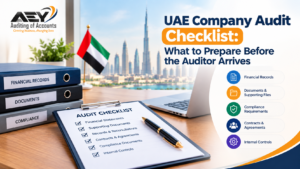
A structured preparation list can be found in the UAE Company Audit Checklist.
Final Takeaway
An auditor can review many parts of a company’s financial information, including revenue, expenses, cash, banks, receivables, payables, inventory, fixed assets, liabilities, equity and related-party transactions. The exact work depends on the audit scope and the evidence required.
Understanding what auditors commonly review helps businesses prepare better records and respond more efficiently. For professional audit support, see Audit Services in Dubai.