
Tax Residency Certificate UAE
Tax Residency Certificate UAE (TRC)
A Tax Residency Certificate (TRC) is an official UAE tax-residency document used to demonstrate that an individual or company qualifies as a UAE tax resident for the relevant period and purpose. A UAE TRC is mainly used for international tax matters, including applications for benefits under applicable Double Taxation Avoidance Agreements (DTAAs). It may be requested by foreign tax authorities, overseas financial institutions, banks, business partners or other organizations that require evidence of UAE tax residency. The exact eligibility conditions, supporting documents and treaty requirements depend on the applicant and the intended use of the certificate.
What Is a Tax Residency Certificate in the UAE?
A UAE Tax Residency Certificate, commonly abbreviated as TRC, provides evidence of UAE tax residency for a specified period. It is important to understand that a TRC is not a general tax-exemption certificate. It does not automatically remove a person’s or company’s tax obligations. Instead, it can be used as supporting evidence when applying the relevant tax treaty provisions or demonstrating UAE tax residency to another jurisdiction. For individuals, a TRC may be relevant to overseas tax filings, international investments, employment or consultancy income, and requests from foreign tax authorities. For companies, it may support treaty-related matters involving cross-border business income, dividends, interest, royalties, services and other international transactions.
What Is a UAE TRC Used For?
A UAE Tax Residency Certificate may be used for several international tax and compliance purposes, including:
Supporting claims under applicable DTAAs
Demonstrating UAE tax residency to a foreign tax authority
Supporting international tax filings
Addressing potential double-taxation situations
Supporting certain withholding-tax claims
Providing residency evidence to banks and financial institutions
Who Can Apply for a UAE Tax Residency Certificate?
Eligible individuals and companies may apply for a UAE TRC when they satisfy the applicable conditions and can provide the required supporting evidence.
TRC for Individuals
Individual applicants may need to demonstrate their UAE residency position through documents such as:
Passport
Emirates ID
UAE residence documentation
Entry and exit records
Proof of UAE residence
Bank statements
Check the verification result.
Compare the result with the certificate
Save the verified certificate and supporting record.
Double Taxation Relief
Helps avoid or reduce double taxation on income such as dividends, interest, royalties, and business profits in treaty countries.
International Compliance
Frequently required by tax authorities, banks, and financial institutions for CRS compliance and cross-border financial reporting in jurisdictions such as the EU, UK, United States, Canada, Australia, India, Singapore, China, South Africa, and other UAE treaty countries.
Business Advantages
Facilitates cross-border transactions, profit repatriation, and treaty-based tax planning for companies operating in GCC and global markets.
Personal Perks
For expatriates, a TRC supports confirmation of UAE tax residency for personal tax filings, international investments, and financial planning.
Key Takeaway
With the introduction of the UAE’s 9% Corporate Tax regime, a Tax Residency Certificate remains a crucial document for multinational enterprises (MNEs) and high-net-worth individuals seeking treaty benefits and international tax compliance.
UAE TRC Application Process
A typical Tax Residency Certificate application follows a structured process:
1
Check Eligibility
First determine whether the individual or company satisfies the applicable UAE tax residency requirements.
2
Prepare Supporting Documents
Collect the required identification, residency, financial, and corporate records.
3
Submit the Application
The application is submitted electronically through the official EmaraTax portal.
4
Pay the Applicable Fees
Government and certificate fees apply. Check current fees prior to submission as charges may update.
5
Authority Review
The tax authority reviews the submitted application and supporting documentation.
6
Provide Additional Information
The authority may request further clarification or supplementary evidence if required.
7
Certificate Issuance
Once approved, the Tax Residency Certificate (TRC) is issued electronically.
Note:
The Federal Tax Authority has updated the TRC payment process. The full TRC fee must be paid in advance at the time of submitting the application.

Yusuf Fakhree
Experienced Chartered Accountant and Audit Specialist with a proven track record in delivering high-quality audit, assurance, and compliance solutions
Follow us on
Recent Post
UAE Input VAT Verification Requirements
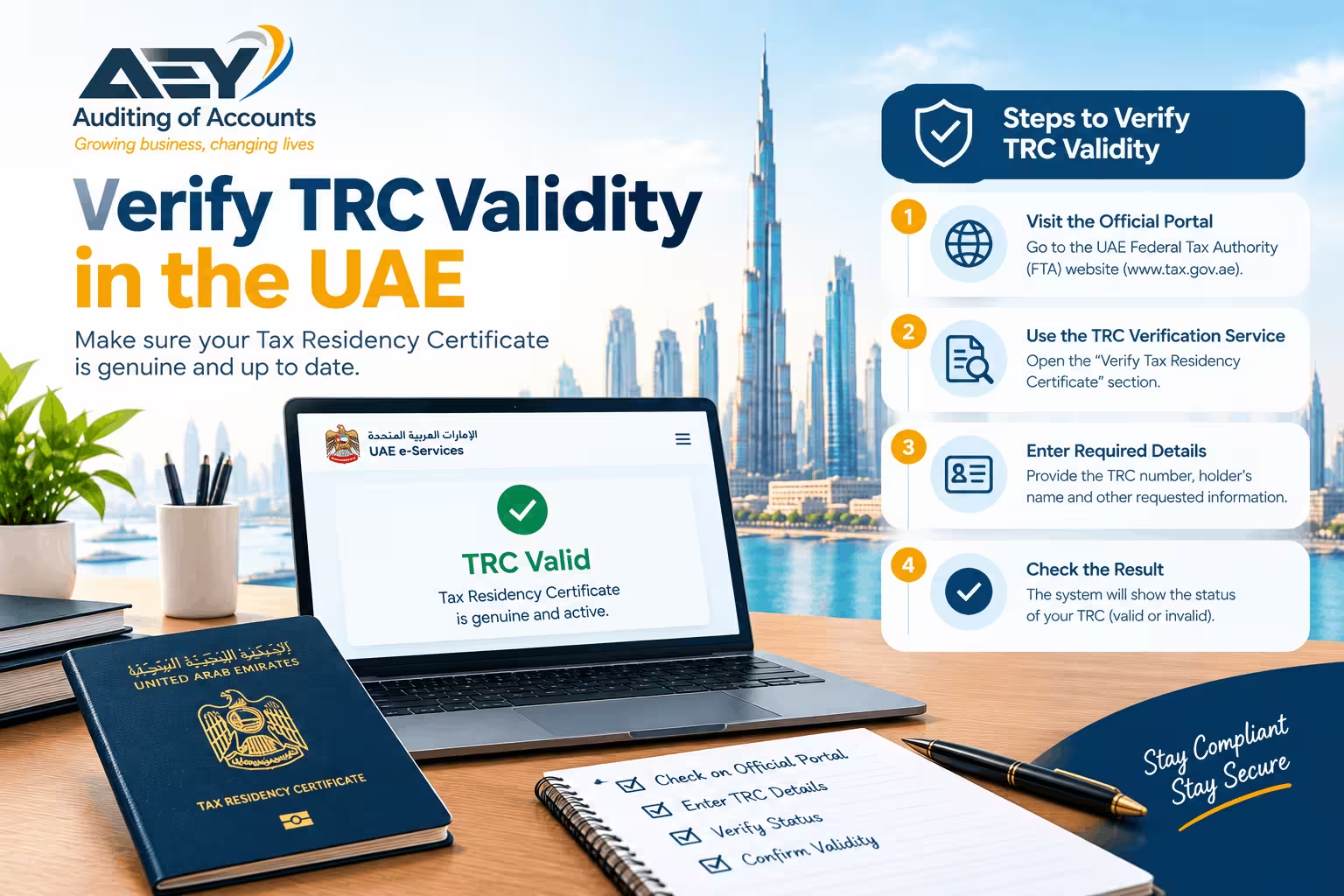
Verify TRC Validity in the UAE
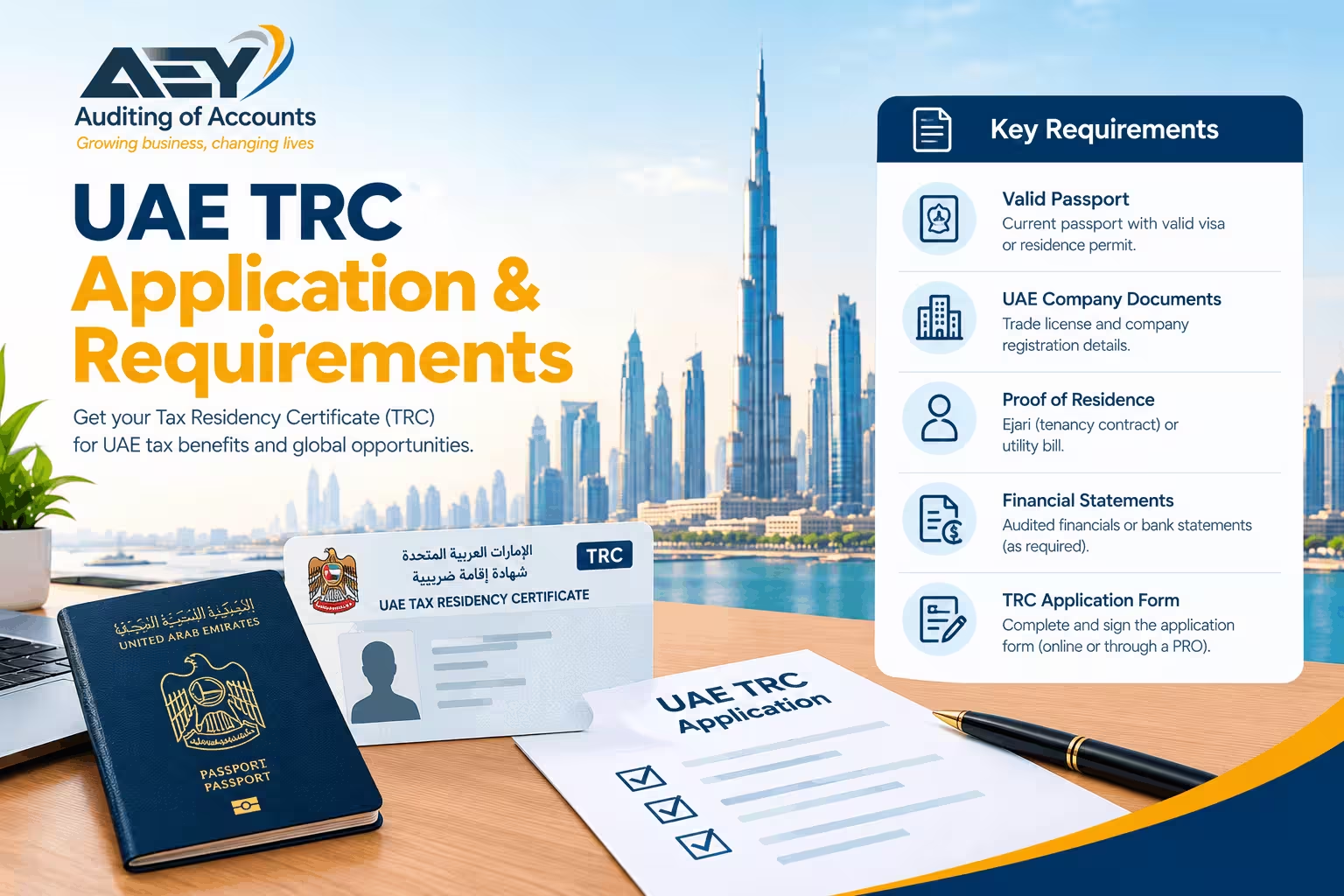
UAE TRC Application & Requirements
Fixed Asset Audit in UAE: Documents, Checks and Common Errors
Our Services
TRC for UAE Companies
UAE companies may apply for a TRC for international tax and treaty purposes. Corporate applicants may be asked for documents such as:
Valid trade licence
Incorporation documents
MOA or AOA
Ownership information
Financial statements
Company bank statements
Office or lease documentation
Where financial reporting or audited accounts are required for your circumstances, Audit & Assurance Services in the UAE can provide the relevant audit support. If your company needs its accounts prepared before an audit or regulatory submission, see our Financial Statement Preparation Services.
UAE TRC Eligibility Requirements
TRC eligibility is not determined by a single document alone. The assessment can depend on factors such as:
- The applicant's residency status
- Physical presence and residency evidence
- Legal status in the UAE
- Company establishment and operations
- Financial and corporate records
- The period for which the certificate is requested
Meeting general eligibility conditions does not necessarily guarantee issuance. The relevant authority may review the application and request additional information or supporting documents.
How to Apply for a UAE Tax Residency Certificate
TRC applications are submitted electronically through the UAE’s designated tax platform. The general process involves:
Checking eligibility
Preparing the required supporting documents
Completing the application
Submitting the supporting information
Paying the applicable government and certificate fees
Responding to any requests for additional information
For the detailed document checklist, application steps, fees and practical preparation guidance, see our dedicated UAE TRC application requirements guide.
Eligibility and the 183-Day Question
The 183-day rule is important but should not be presented as the only UAE tax-residency test. The FTA’s Tax Resident and TRC guide describes multiple circumstances for natural persons, including a 90-day test where additional conditions are met. Treaty-purpose TRC applications also have purpose-specific requirements. Send readers with a personal residency question to the specialist
UAE TRC for Individuals guide rather than duplicating all individual rules here.
Documents Required for a UAE TRC
The exact document list depends on whether the applicant is an individual or company.
Individual TRC Documents
Common supporting documents can include:
- Passport copy
- Emirates ID
- Residence documentation
- Entry and exit report
- Proof of residence
- UAE bank statement
- Employment, salary or business documentation
Company TRC Documents
- Corporate applications may require:
- Trade licence
- Incorporation documents
- MOA/AOA
- Shareholder or ownership information
- Financial statements
- Bank statements
- Office or lease documents
- Other corporate records requested during review
UAE TRC Fees and Processing Time
TRC fees and administrative requirements can change, so applicants should check the current official fee schedule before submitting an application. Processing also depends on the completeness of the application and whether additional information is requested. For a detailed discussion of current application requirements and preparation, see our TRC application and requirements guide.
How Long Is a UAE TRC Valid?
A Tax Residency Certificate relates to a specified tax or residency period. Continued use may require a new certificate for a later period. The relevant period should therefore be checked carefully before submitting the certificate to a foreign tax authority, bank or other organization.
TRC for Individuals vs Companies
Comparison| Criteria | Individual TRC | Company TRC |
|---|---|---|
| Main purpose | Demonstrate individual UAE tax residency | Demonstrate company UAE tax residency |
| Common use | Personal international tax matters | Corporate cross-border tax matters |
| Supporting evidence | Residency, identity and presence records | Corporate, financial and operational records |
| Treaty-related use | Yes, where applicable | Yes, where applicable |
| Authority review | Yes | Yes |
Note: The supporting documentation differs because individuals and companies demonstrate UAE tax residency in different ways.
UAE Corporate Tax and TRC: What Is the Difference?
TRC vs TRN
ComparisonA TRC and a Tax Registration Number (TRN) serve different purposes.
| TRC | TRN |
|---|---|
| Demonstrates tax residency | Identifies a taxpayer for tax administration |
| Primarily relevant to international/treaty matters | Used for UAE tax administration |
| May be requested by foreign tax authorities | Used in relevant UAE tax registrations and filings |
Note: A TRC does not replace a TRN, and a TRN does not replace a TRC.
Where Is a UAE TRC Commonly Used?
A UAE TRC can be relevant when dealing with:
Foreign tax authorities
Overseas customers
International banks
Financial institutions
Multinational groups
Overseas investments
Cross-border contracts
Dividends and interest
Royalties
International consultancy income
The foreign jurisdiction ultimately determines whether the certificate is sufficient for the specific tax or compliance purpose.
Common Problems With UAE TRC Applications
Applications can encounter delays when supporting information is incomplete, inconsistent or unclear. Common issues can include:
Missing supporting documents
Expired identification or corporate documents
Inconsistent company information
Incomplete residency evidence
Missing financial records
Incorrect application information
Documents that do not sufficiently support the requested certificate
Preparing the application carefully before submission can reduce avoidable issues.
How to Verify a UAE TRC
After receiving a Tax Residency Certificate, you may need to confirm its authenticity before giving it to a foreign tax authority, bank or other organization. The verification process can involve the certificate’s QR code and the information shown on the certificate. For the detailed verification procedure, see our guide on how to verify a UAE TRC.
Financial Records and TRC Applications
Company applicants may need financial and corporate records to support their TRC application. This is why accurate accounting records and properly prepared financial statements can be important when preparing a corporate application. AEY can also assist businesses with Financial Statement Preparation and Audit & Assurance Services where these services are relevant to the company’s reporting requirements.
For businesses that need ongoing accounting support, our Accounting Services in Dubai can help maintain organized financial records for reporting and compliance.
TRC and Wider Business Compliance
A Tax Residency Certificate is only one part of a company’s broader compliance environment. Depending on the business, related requirements may include:
- Financial reporting
- Corporate Tax compliance
- Accounting and bookkeeping
- Audit and assurance
- AML compliance
- Regulatory reporting
For companies reviewing their wider regulatory position, AEY also provides Anti-Money Laundering (AML) Services in the UAE. These services address different compliance requirements and should not be treated as substitutes for one another.
How AEY Auditing Helps With UAE TRC Applications
AEY Auditing of Accounts assists individuals and companies with the practical preparation of UAE Tax Residency Certificate applications. Our support can include:
Eligibility assessmen
Eligibility assessmen
Document review
Application preparation
Compliance review
Supporting-document preparation
Follow-up assistance
Individual and company TRC support
Our objective is to help applicants prepare a complete and consistent application based on their circumstances and the requirements applicable to their certificate.
Why Choose AEY for TRC Assistance?
A TRC application can involve residency evidence, corporate records, financial information and international tax considerations.
AEY’s wider audit, accounting and compliance experience allows us to review the application in the context of the applicant’s broader financial and business records.
For companies, this can be particularly useful when the TRC application needs to be considered alongside financial statements, audit requirements or Corporate Tax compliance.
Need Help With a UAE Tax Residency Certificate?
Whether you are an individual, entrepreneur, investor or UAE company, preparing the correct documentation is an important part of a TRC application.
AEY Auditing of Accounts can assist with the practical preparation and review of your UAE Tax Residency Certificate application.
📍 Office No. 207, Saheel Tower 1, Al Nahda First, Dubai, UAE
Phone: +971 56 413 4070
Landline: +971 4 242 5253
Email: info@aey.ae
Get Started with us today
Your business is special. Let us calculate your dreams
FAQs Of Auditing
What is a TRC in the UAE?
A Tax Residency Certificate (TRC) is an official UAE document used to demonstrate tax residency for the relevant period and purpose, particularly for international tax and treaty-related matters.
Who can apply for a UAE Tax Residency Certificate?
Eligible individuals and UAE companies may apply when they meet the applicable requirements and provide the required supporting documents.
Is a TRC the same as a TRN?
No. A TRC demonstrates tax residency, while a TRN identifies a taxpayer for UAE tax administration.
Does a TRC eliminate UAE Corporate Tax?
No. A TRC and UAE Corporate Tax serve different purposes. A TRC is mainly relevant to proving tax residency and supporting applicable international treaty claims.
What documents are required for a UAE TRC?
Requirements depend on the applicant. Individuals may need identity, residency, presence and financial documents, while companies may need corporate, financial and operational records.
Can a free zone company apply for a TRC?
Eligible UAE free-zone companies may apply subject to the applicable requirements and supporting documentation.
How can I verify a UAE TRC?
An issued TRC can be checked through the applicable official verification process. See our detailed UAE TRC verification guide for the verification steps.
Can AEY Auditing help with a TRC application?
Yes. AEY Auditing can assist with eligibility review, document preparation, application support and related financial or compliance requirements.