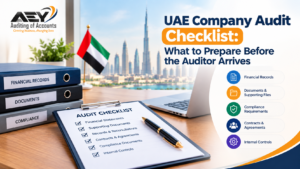
A company audit becomes easier when the financial records are organized before the auditor starts. This does not mean management has to predict every audit question. It means the business should make sure important balances, documents and explanations are available and easy to trace.
Use this checklist as a practical starting point. The exact records required will depend on the company, industry, accounting system and audit scope.
For a more detailed explanation of the documents auditors commonly request, see Audit Documents UAE.
Start with the core accounting records that show how the company's financial information has been recorded.
- Trial balance is updated and agrees with the accounting system.
- General ledger is available for the relevant reporting period.
- Financial statements are prepared or substantially ready for review.
- Chart of accounts is current and understandable.
- Material journal entries can be explained and supported.
Bank accounts are commonly reviewed during an audit, so unresolved differences should be identified before fieldwork begins.
- All relevant bank statements are available.
- Bank reconciliations are prepared.
- Unreconciled items are investigated.
- Unidentified deposits and payments are explained.
- Loan and financing accounts are reconciled where relevant.
- Sales invoices are available for selected transactions.
- Credit notes and adjustments are supported.
- Customer balances agree with the accounting records.
- Significant or unusual revenue transactions are identified.
- Revenue cut-off issues have been reviewed.
The objective is to make it easy to trace revenue from the accounting records to supporting evidence.
- Major purchase invoices are available.
- Material expenses have supporting documentation.
- Large or unusual expenses can be explained.
- Expense balances are properly classified.
- Any significant prepayments or accruals have supporting schedules.
Before the audit, management should understand which customer balances are old, disputed or unlikely to be collected.
- Receivables ageing is up to date.
- Old balances are reviewed.
- Customer reconciliations are completed where needed.
- Credit notes and subsequent receipts are considered.
- Potential bad debts are identified for management review.
- Supplier balances are reconciled.
- Material invoices are available.
- Old outstanding balances are investigated.
- Unrecorded liabilities are considered.
Major supplier transactions have appropriate support.
If the business holds inventory, stock records should be organized before the audit work begins.
- Inventory listing is updated.
- Stock balances agree with the accounting records where applicable.
- Slow-moving or obsolete items are identified.
- Inventory valuation information is available.
- Differences or adjustments can be explained.
- Fixed asset register is updated.
- Purchase documents are available for significant additions.
- Disposals are recorded and supported.
- Depreciation schedules are updated.
Missing or damaged assets are identified.
- Payroll summaries are available.
- Payroll totals can be reconciled to the accounting records.
- Employee-related liabilities are identified.
- Material payroll adjustments can be explained.
- Loan agreements and statements are available.
- Repayment schedules are current.
- Interest or financing charges can be supported.
- Material provisions or obligations are identified.
Significant liabilities can be reconciled.
- Related parties are identified.
- Related-party balances are reconciled.
- Significant transactions have supporting agreements or documentation.
- Management understands any disclosures relevant to the financial reporting.
Depending on the business and audit scope, relevant VAT, corporate tax, free zone or other compliance records may form part of the supporting information.
- Relevant tax returns and records are organized.
- Tax-related balances can be reconciled to the accounting records.
- Free zone reporting information is available where relevant.
Make a separate list of transactions that are unusual, large, new or outside normal business activity.
Examples can include major asset purchases, business acquisitions, unusual financing, large related-party transactions or significant one-off expenses.
Giving the auditor early context can make the review more efficient.
Before sending the records to the auditor, management should perform a final review.
- Bank balances are reconciled.
- Receivables and payables have been reviewed.
- Major account movements are understood.
- Supporting documents are organized.
- Unusual transactions are identified.
- Important contracts and agreements are available.
- Open accounting questions have been listed.
A simple internal test is useful: Pick 10 large transactions at random. Can your finance team quickly produce:
- Invoice
- Contract
- Payment evidence
- Accounting entry
- Related correspondence where relevant
- Tax treatment
- Supporting calculation
If it takes days to find basic documents, your audit-readiness is weak.
What If a Document Is Missing?
Do not wait for the auditor to discover the problem. Tell the audit team early and explain what happened. In some cases, alternative evidence may be available, depending on the nature of the item and the engagement.
How Early Should You Start Preparing?
Start before the audit deadline becomes urgent. Earlier preparation gives management time to correct reconciliations, locate missing documents and answer internal accounting questions.
For more information about the expected timeline, read How Long Does a Company Audit Take in Dubai?
Final Takeaway
A strong audit preparation process is mainly about organized records, completed reconciliations and clear explanations for significant transactions. This checklist can help management identify gaps before the auditor begins.
When you are ready to discuss an audit engagement, learn more about External Audit Services in Dubai, explore Audit Services in Dubai, or Contact AEY Auditing for a quotation based on your company’s requirements.