
TRC UAE (Tax Residency Certificate)
UAE TRC Eligibility Checklist
Before submitting your application, review:
- Is your residency position properly documented?
- Are your identification documents valid?
- Are your company records current?
- Do your company name and ownership details match?
- Are financial records available where required?
- Are your bank statements available?
- Is your entry and exit evidence complete where required?
- Do you have the documents needed for the requested period?
Eligibility is reviewed based on the circumstances of each application.

UAE TRC Fees
| Applicant | Official TRC fees |
|---|---|
| Submission fee | AED 50 |
| FTA Corporate Tax registrant with a TRN | AED 500 |
| Individual without a Corporate Tax TRN | AED 1,000 |
| Company/legal person without a Corporate Tax TRN | AED 1,750 |
| Printed/hard-copy certificate | AED 250 extra |
UAE TRC Application Process
A typical Tax Residency Certificate application follows a structured process:
Check Eligibility
First determine whether the individual or company satisfies the applicable UAE tax residency requirements.
Prepare Supporting Documents
Collect the required identification, residency, financial, and corporate records.
Submit the Application
The application is submitted electronically through the official EmaraTax portal.
Pay the Applicable Fees
Government and certificate fees apply. Check current fees prior to submission as charges may update.
Authority Review
The tax authority reviews the submitted application and supporting documentation.
Provide Additional Information
The authority may request further clarification or supplementary evidence if required.
Certificate Issuance
Once approved, the Tax Residency Certificate (TRC) is issued electronically.
Who Can Apply for a TRC?
Both individuals and companies can apply for a TRC, provided they meet the eligibility requirements.
Individuals
An individual may apply if they hold valid UAE residency, meet physical presence conditions, and provide supporting documents.
Commonly Required For:- Employees working in the UAE
- Business owners
- Investors
- Freelancers
- Self-employed professionals
- High-net-worth individuals with overseas income
Companies
A company may apply if it is legally established in the UAE, meets MoF requirements, and maintains proper records.
Frequently Used When Dealing With:- International suppliers
- Foreign tax authorities
- Overseas clients
- Banks
- Investment firms
- Cross-border group companies
Why Is a TRC Important?
Without a valid Tax Residency Certificate (TRC), businesses and individuals may not be able to claim tax treaty benefits available under the UAE’s Double Taxation Avoidance Agreements.
- This can Result in:
- Higher withholding taxes
- Delays in international transactions
- Additional documentation requests
- Difficulty proving UAE tax residency
- Increased compliance obligations in other countries

Yusuf Fakhree
Experienced Chartered Accountant and Audit Specialist with a proven track record in delivering high-quality audit, assurance, and compliance solutions
Follow us on
Recent Post
UAE Input VAT Verification Requirements
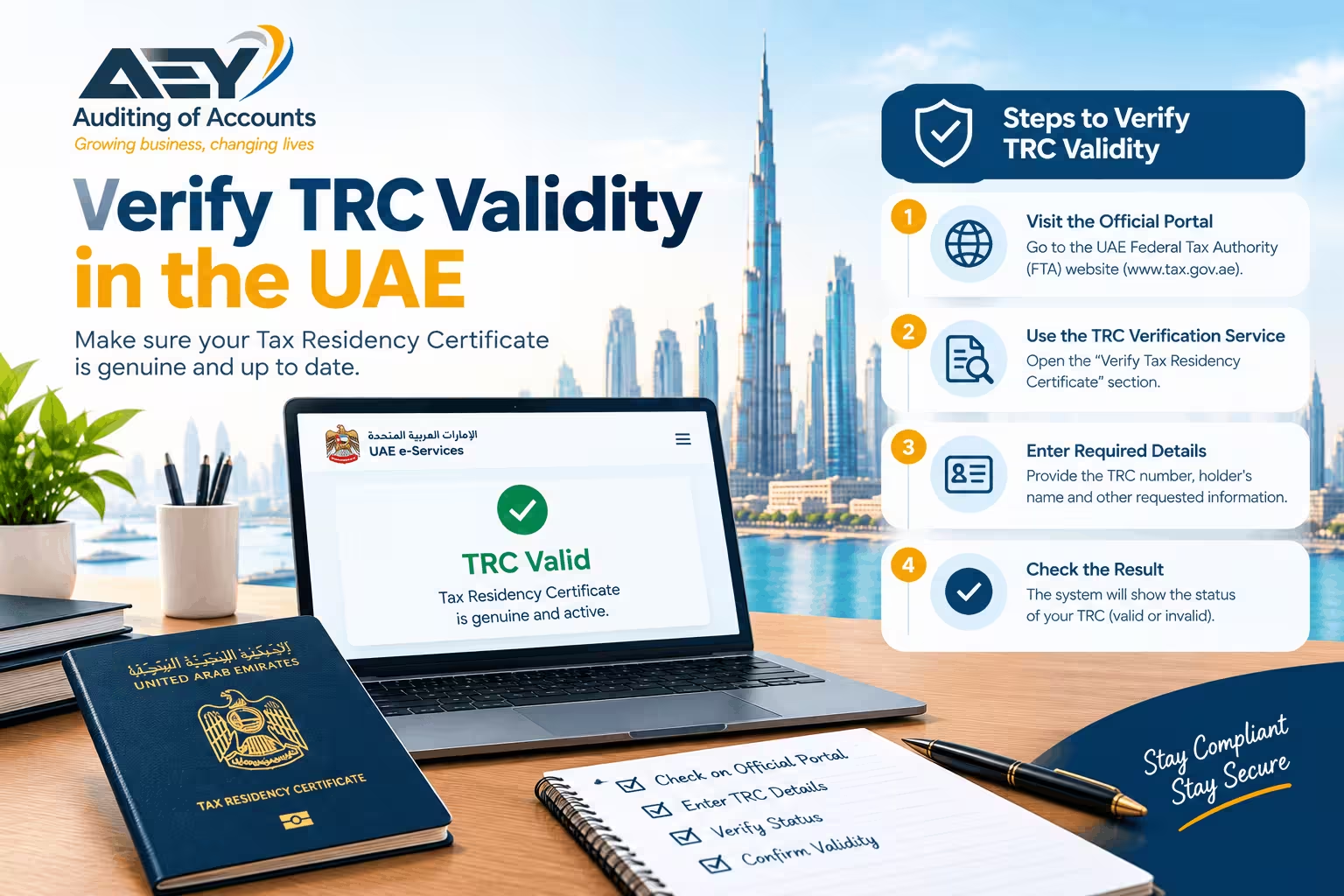
Verify TRC Validity in the UAE
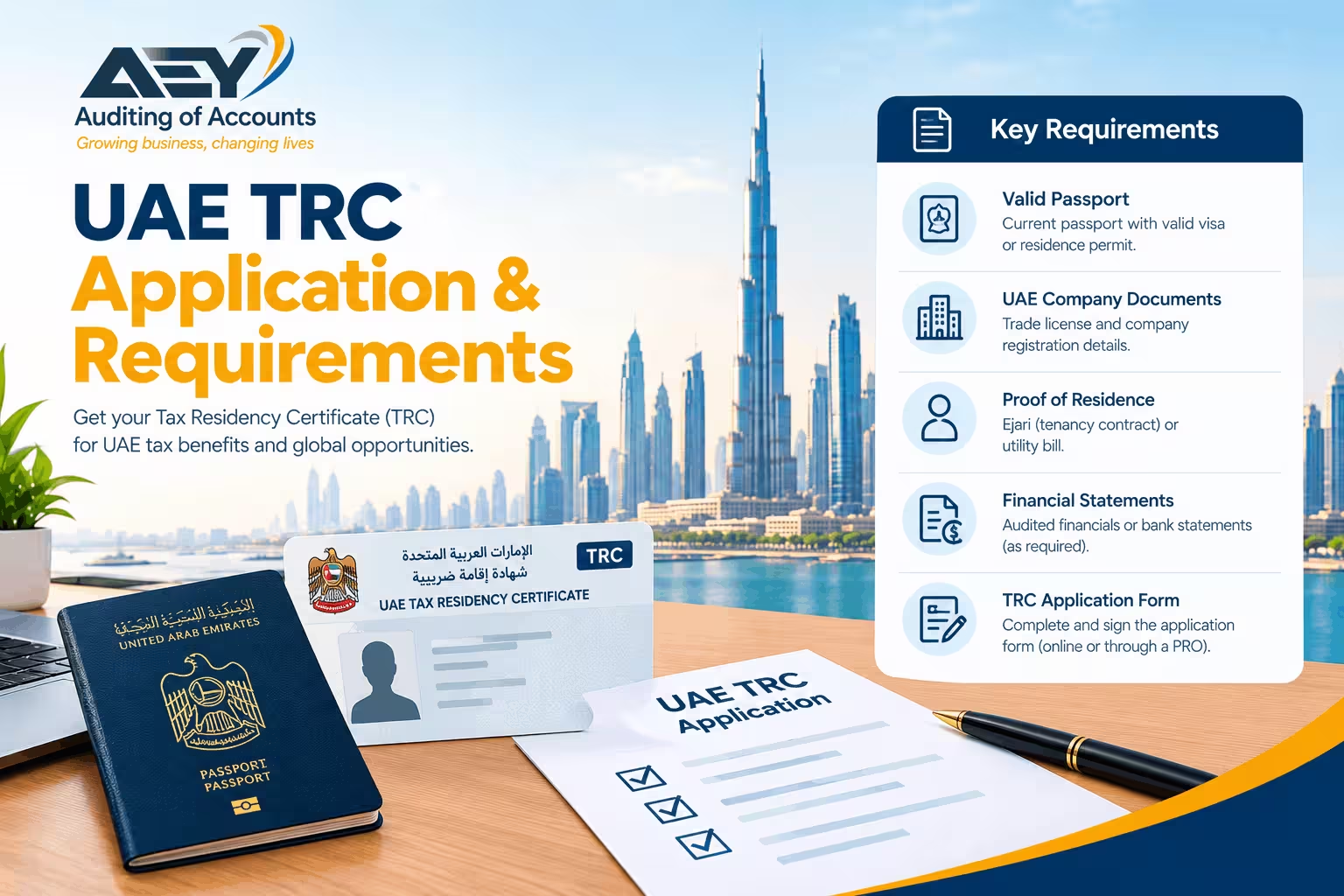
UAE TRC Application & Requirements
Fixed Asset Audit in UAE: Documents, Checks and Common Errors
Our Services
Industries We Serve
At AEY Auditing of accounts, we bring proven expertise across diverse sectors. We’ve delivered precise audit solutions for Healthcare providers, ensuring compliance and financial health. Our work in Shipping and Trading has helped optimize operations and mitigate risks. For Manufacturing clients, we’ve focused on cost efficiency and robust financial reporting, providing clarity for every industry we serve.

Healthcare
We deliver precise audit solutions for healthcare providers, ensuring regulatory compliance and robust financial health.

Shipping
We provide comprehensive audit services for Shipping businesses, focusing on transparent transactions and efficient financial management.

Trading
Our expertise in the Trading sector helps optimize operations, manage complex logistics, and mitigate financial risks.

Manufacturing
For manufacturing clients, our audits focus on enhancing cost efficiency, inventory control, and reliable financial reporting.

Insurance
Thorough audits for insurance companies to ensure compliance, accuracy, and financial clarity.
Free Zones
We are approved auditors by the following UAE free zones

















Get Started with us today
Your business is special. Let us calculate your dreams
Frequently Asked Questions (FAQs)
A TRC (Tax Residency Certificate) is an official document issued by the UAE Ministry of Finance that confirms an individual or company is a tax resident of the UAE. It is mainly used to claim benefits under Double Taxation Avoidance Agreements (DTAAs) and prove UAE tax residency to foreign tax authorities.
Both individuals and companies can apply for a TRC if they meet the eligibility requirements set by the Ministry of Finance.
Individuals generally need to satisfy the UAE residency requirements, while companies must be legally established and meet the applicable operational requirements.
No. A TRC is not mandatory for every individual or business. It is usually required when:
- Claiming benefits under a tax treaty
- Reducing withholding tax in another country
- Proving UAE tax residency
- Completing international tax compliance requirements
The UAE Ministry of Finance (MoF) issues the Tax Residency Certificate. Applications are submitted online through the EmaraTax platform.
A UAE TRC is valid for one year from the date of issue. If you continue to require proof of UAE tax residency, you must submit a new application after the certificate expires.
Most applications are processed within 5 to 10 working days, provided all required documents are complete and no additional information is requested by the Ministry of Finance. Processing times may vary depending on the complexity of the application.
Government fees may change over time. Generally, applicants should expect:
| Fee | Approximate Amount |
|---|---|
| Application Fee | AED 50 |
| Individual Certificate | As per current MoF fee schedule |
| Company Certificate | As per current MoF fee schedule |
Additional professional service fees may apply if you appoint a consultant to manage the application.
Yes. Companies established in UAE free zones can apply for a TRC, provided they satisfy the Ministry of Finance's eligibility requirements and submit all required supporting documents.
No. A TRC does not reduce the UAE Corporate Tax rate. Instead, it helps individuals and businesses claim tax treaty benefits when dealing with foreign countries under Double Taxation Avoidance Agreements.
Commonly required documents include:
- Valid trade license
- Certificate of Incorporation
- Memorandum of Association (where applicable)
- Passport, Emirates ID and visa copies of shareholders or managers
- Audited financial statements
- Company bank statements
- Office lease agreement or Ejari
- Other documents requested by the Ministry of Finance
Document requirements may vary depending on the applicant's circumstances.
Individuals are generally required to provide:
- Passport copy
- UAE residence visa
- Emirates ID
- UAE bank statements
- Entry and exit report
- Proof of residence (Ejari or title deed)
- Employment or business ownership documents
- Any additional documents requested by the Ministry of Finance
Yes. Applications may be rejected if:
- Required documents are missing.
- Information is inconsistent.
- Residency requirements are not met.
- Supporting evidence is insufficient.
- The Ministry of Finance requests additional documents that are not provided.
Preparing a complete application helps reduce delays.
No. A TRN is issued for UAE tax registration purposes, such as VAT or Corporate Tax. A TRC is issued to confirm UAE tax residency for international tax treaty purposes. They serve different functions.
Yes. AEY Auditing assists individuals and companies with:
- Eligibility assessment
- Document review
- Application preparation
- EmaraTax submission
- Ministry of Finance follow-up
- Support until the certificate is issued