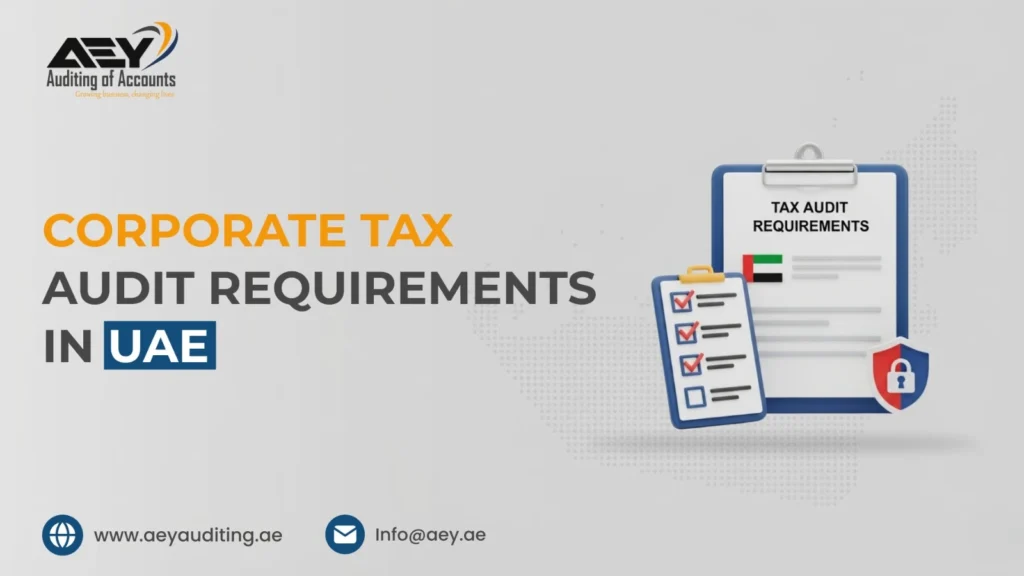
With the introduction of UAE Corporate Tax, businesses are now required to maintain proper financial records and, in many cases, undergo a corporate tax audit. Many companies mistakenly believe audits apply only to large businesses or mainland companies. In reality, corporate tax audit requirements in UAE apply to both mainland and free zone entities, depending on their structure and tax position.
This guide explains who needs a tax audit, when it is required, and how to stay compliant.
What Is a Corporate Tax Audit in UAE?
A corporate tax audit is an independent examination of a company’s financial statements and tax computation to confirm compliance with UAE Corporate Tax Law and Federal Tax Authority (FTA) regulations.
The audit ensures:
- Correct calculation of taxable income
- Proper application of exemptions and reliefs
- Accurate tax filings
Who Must Comply With Corporate Tax Audit Requirements?
Mainland Companies
All mainland companies registered in the UAE must:
- Maintain audited financial statements
- File corporate tax returns
- Support tax calculations with audit-ready records
Free Zone Companies
Free zone companies must comply if they:
- Claim 0% qualifying free zone tax rate
- Earn income from mainland UAE
- Are part of a group structure
- Are requested by the FTA
Important:
Free zone status does NOT eliminate audit requirements.
Foreign Companies & Branches
Foreign entities operating in UAE through:
- Branch offices
- Permanent establishments
must also meet corporate tax audit obligations.
Corporate Tax Audit Thresholds in UAE
Category | Audit Requirement |
Small Business Relief | Audit may still be required |
Qualifying Free Zone Person | Mandatory |
Revenue above threshold | Mandatory |
Group entities | Mandatory |
FTA request | Mandatory |
Even if tax payable is zero, audited financials may still be required.
Key Corporate Tax Audit Requirements
IFRS-compliant financial statements
Accurate tax computation
Supporting schedules for adjustments
Proper documentation for exemptions
Consistent accounting policies
Documents Required for Corporate Tax Audit
To meet UAE corporate tax audit requirements, businesses must maintain:
Financial Records
- Audited financial statements
- Trial balance
- General ledger
- Fixed asset register
Tax Records
- Corporate tax computation
- Adjustments & reconciliation schedules
- Loss carryforward records
Supporting Documents
- Bank statements
- Revenue invoices
- Expense vouchers
- Contracts & agreements
Accounting Standards Requirement
All companies must prepare accounts using:
- IFRS or IFRS for SMEs
- Consistent accounting methods
- Proper revenue recognition policies
Failure to follow IFRS can result in:
- Audit qualifications
- Tax reassessment
- FTA penalties
Corporate Tax Audit Timeline
Typical Audit Timeline
- Financial year-end closure
- Audit fieldwork
- Tax computation review
- Audit report issuance
- Corporate tax filing
Average duration
2–6 weeks
Corporate Tax Audit Cost in UAE
Company Size | Estimated Fees (AED) |
Small Business | 3,000 – 6,000 |
Medium Business | 6,000 – 12,000 |
Large / Complex | 12,000 – 25,000+ |
💡 Good record-keeping = lower audit cost.
Common Non-Compliance Issues
- Incomplete documentation
- Incorrect tax adjustments
- Unsupported exemptions
- Poor bookkeeping
Late audit completion
How to Stay Compliant
✔ Maintain monthly bookkeeping
✔ Prepare tax computations early
✔ Engage approved auditors
✔ Review free zone qualification annually
✔ Keep records for minimum 7 years
Why Use Professional Corporate Tax Auditors?
Professional auditors help you:
- Meet all audit requirements
- Reduce compliance risks
- Handle FTA queries
- Avoid penalties
- File accurate tax returns
FAQs
Is corporate tax audit mandatory in UAE?
Not for all businesses, but mandatory for many, especially free zone and medium to large companies