AML Training UAE
AML Training UAE At a Glance
AML training helps your employees understand what they must do to meet UAE anti-money laundering requirements. The training can cover:
- AML/CFT requirements
- Customer Due Diligence (CDD)
- KYC procedures
- Enhanced Due Diligence (EDD)
- Customer risk assessment
- UBO identification
- PEP and sanctions screening
- Suspicious transaction red flags
- goAML reporting
- MLRO responsibilities
- Internal escalation
- Record keeping
Training Options
AML| Option | Format | Suitable For |
|---|---|---|
| In-house workshop | On-site | Teams and departments |
| Online training | Zoom / Teams | Remote teams |
| Executive session | 1:1 | Directors, owners, senior management |
| MLRO training | 1:1 / group | Compliance Officers and MLROs |
| Sector workshop | Custom | Real estate, accounting, CSPs, DPMS and other regulated businesses |
Tailored AML training options designed to meet UAE regulatory requirements for staff and management.
Who Needs AML Training in the UAE?
AML training is especially relevant for businesses that fall within the UAE AML framework, including DNFBPs and other regulated entities. This can include:
Training should not be limited to the MLRO. Employees who deal with customers, transactions, payments or compliance checks should understand their role.
Real estate brokers and agents
Dealers in precious metals and stones
Lawyers and notaries for applicable activities
Accountants and auditors
Corporate service providers
Financial institutions
The UAE Ministry of Economy & Tourism currently provides AML training and workshops for DNFBP sectors, including sessions on risk understanding, customer risk, Compliance Officer duties, proliferation-financing risk and suspicious-transaction reporting.
Is AML Training Mandatory in the UAE?
For businesses subject to UAE AML requirements, employee awareness and training form part of the compliance framework. The important point is that training should match the employee’s job.Example
A salesperson needs to know
- What customer documents to collect
- What red flags to look for
- Who to report concerns to
An MLRO needs much more
- Risk assessment
- Suspicious transaction assessment
- Reporting decisions
- goAML responsibilities
- Regulatory communication
So one generic two-hour session may not be suitable for everyone.
What Does AML Training Cover?
Employees learn the rules that apply to their business and how those rules affect day-to-day work.
The course should use the current UAE legal framework, not old 2018/2019 references.
Employees learn how to:
- Identify customers
- Verify identity
- Identify UBOs
- Understand ownership structures
- Assess customer risk
- Keep customer records
EDD is used when a customer presents higher risk.
Training can cover:
- High-risk customers
- PEPs
- Higher-risk jurisdictions
- Complex ownership
- Unusual transactions
- Additional verification
Employees learn:
- Why screening is required
- When to screen
- Who should be screened
- How to handle a potential match
- When to escalate a case
This is one of the most practical parts of AML training.
Employees learn:
- What suspicious activity looks like
- Common AML red flags
- How to raise an internal concern
- When the MLRO should review it
- How reporting works through goAML
They should also understand that tipping off a customer about a suspicious transaction report can create serious legal problems.
MLRO-focused training covers:
- Role and authority
- Internal escalation
- Customer risk
- Transaction monitoring
- STR/SAR assessment
- Reporting responsibilities
- Record keeping
- Regulatory communication
- Senior management reporting
Depending on the company, clearances may be needed from:
- Licensing authority
- Immigration
- Labour authorities
- FTA
- Customs
- Utilities
- Telecommunications providers
- Landlord or free zone
- Other government departments
For example, JAFZA's published termination procedure specifically refers to financial, RTA, visa, DEWA, customs and Etisalat clearances where applicable.
The company bank account should normally be closed after:
- Outstanding payments are settled
- Customer receipts are collected
- Supplier payments are completed
- Tax obligations are addressed
- Final balances are dealt with
Keep the final bank statement and closure confirmation with the company's records.
If the company is VAT registered, VAT deregistration may be required.
The Federal Tax Authority currently provides VAT deregistration through EmaraTax. The FTA states that, where deregistration is mandatory, the application must generally be submitted within 20 business days from the date the deregistration obligation starts.
The final VAT return and tax payment are also important.
The FTA states that the final VAT return and payable VAT should be submitted and settled no later than 28 days from the effective deregistration date.
Company liquidation does not automatically remove Corporate Tax obligations.
If the company is registered for Corporate Tax, its tax position must be reviewed and the appropriate deregistration process completed.
The FTA's Corporate Tax deregistration service covers cessation of business and other qualifying circumstances. The service is submitted through EmaraTax.
The FTA currently states that the estimated processing time for a completed Corporate Tax deregistration application is 30 business days, although additional information can extend the process.
This is why tax closure should be planned as part of the liquidation process rather than left until the final day.
Once the required financial, tax and government matters are completed, the company submits the final documents to the relevant authority.
The authority may request:
- Liquidation report
- Liquidator documents
- Shareholder resolution
- Clearances
- Tax documents
- Lease cancellation
- Visa cancellation
- Final financial statements
- Other authority-specific documents
The final stage is cancellation of the company's licence and completion of the company's registration closure.
The company should retain evidence of:
- Licence cancellation
- Tax deregistration
- Liquidation report
- Authority closure
- Bank closure
- Employee/visa cancellation
- Final accounts
These documents can be important if questions arise later.

Yusuf Fakhree
Experienced Chartered Accountant and Audit Specialist with a proven track record in delivering high-quality audit, assurance, and compliance solutions
Follow us on
Recent Post
UAE Input VAT Verification Requirements
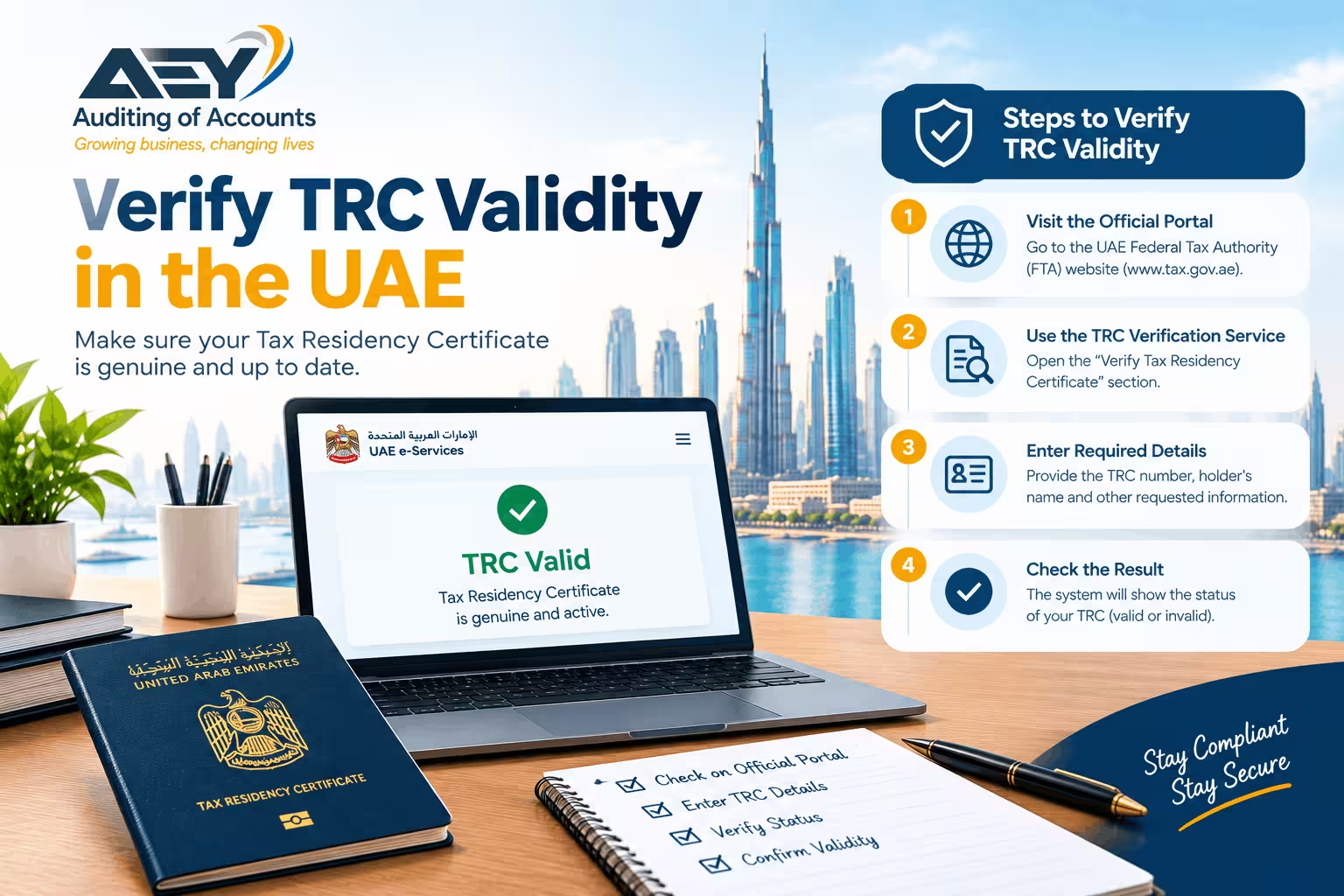
Verify TRC Validity in the UAE
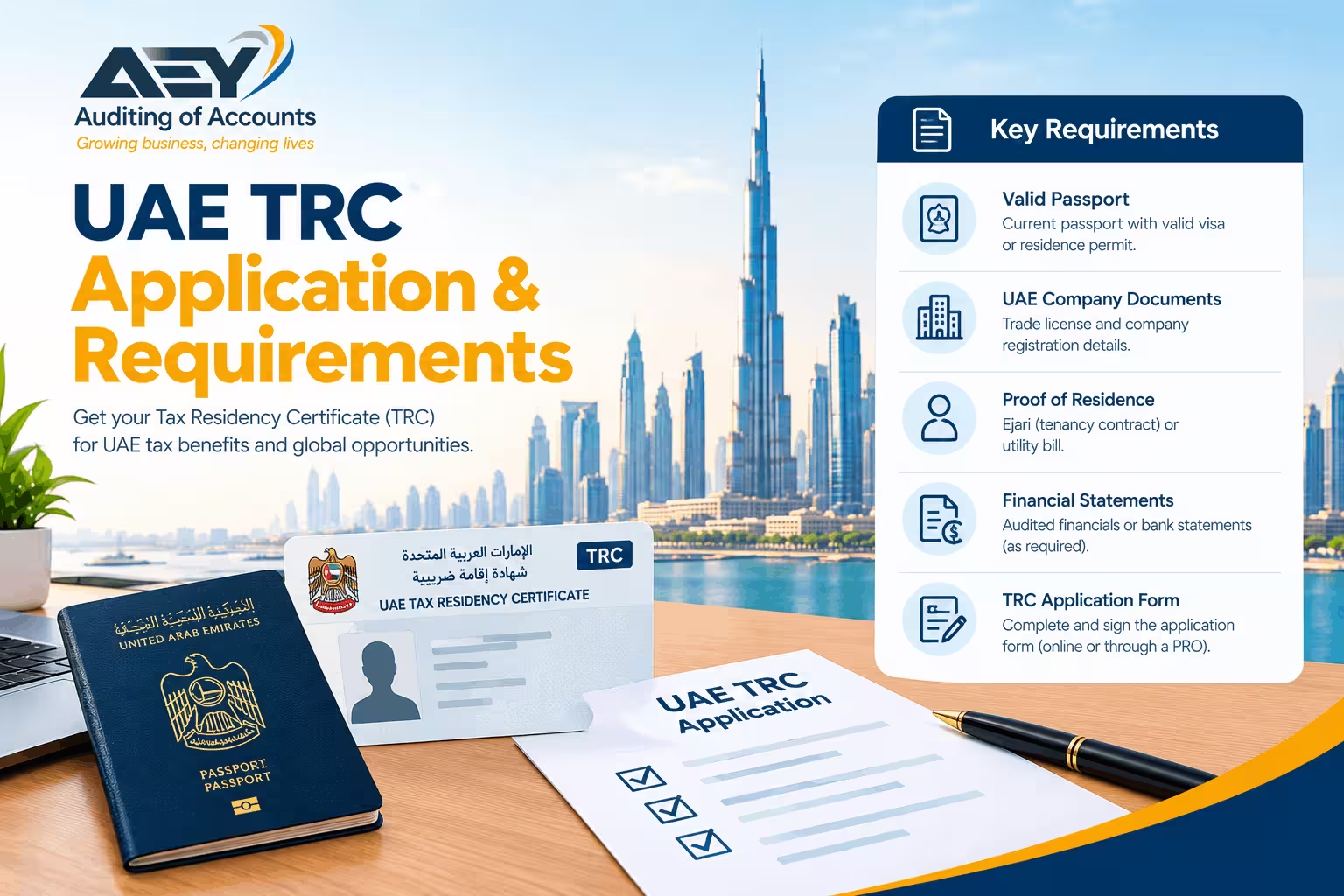
UAE TRC Application & Requirements
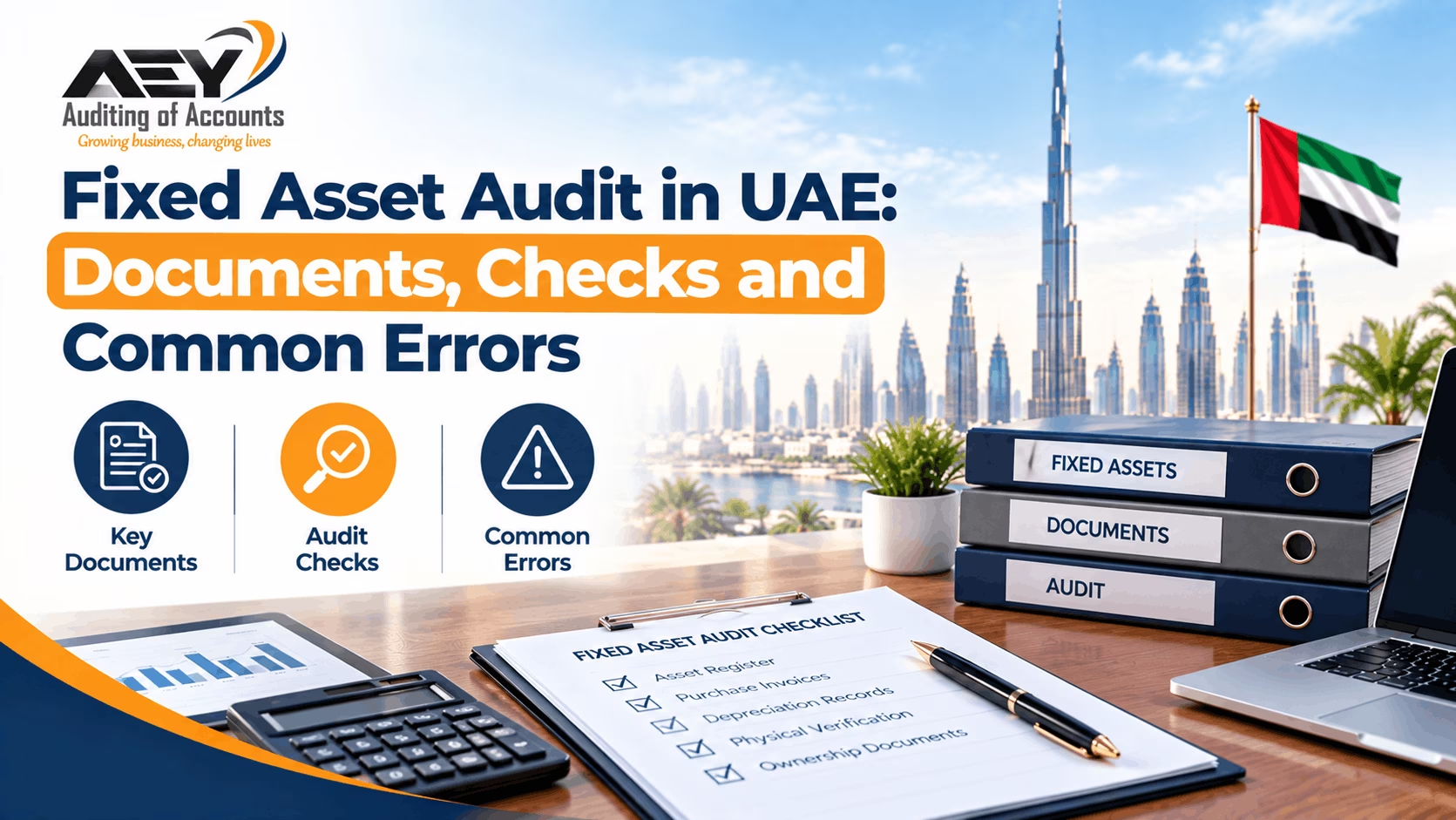
Fixed Asset Audit in UAE: Documents, Checks and Common Errors
Our Services
AML Training by Industry
Real Estate AML Training
Training can focus on:
- Customer and UBO checks
- Property transaction risks
- Cash transactions
- Customer risk scoring
- REAR reporting
- Suspicious property transactions
Gold and Jewellery AML Training
Key areas include:
- Customer verification
- Cash transaction risks
- Transaction monitoring
- UBO checks
- Risk indicators
- Required reporting
Accounting and Audit Firm AML Training
- Customer onboarding
- Beneficial ownership
- Risk assessment
- Suspicious activity
- Client acceptance
- Record keeping
See related AML Compliance Services UAE.
Corporate Service Provider AML Training
Training can cover:
- Company formation risk
- Ownership structures
- Nominee arrangements
- UBO identification
- High-risk customers
- Customer screening
- Internal escalation
AML Training for Employees vs MLRO Training
TrainingThese are not the same course.
| Employee Training | MLRO Training |
|---|---|
| AML awareness | Advanced compliance responsibility |
| KYC basics | Risk assessment |
| Red flags | STR/SAR assessment |
| Internal escalation | Reporting decisions |
| Customer checks | goAML responsibilities |
| Basic sanctions awareness | Regulatory communication |
A small company may need basic staff training plus a separate session for its MLRO.
Structuring training paths according to distinct operational responsibilities.
AML Training Formats
On-Site
Real Estate AML Training
Training is delivered directly to your team at your Dubai or UAE office premises.
Best For:
SMEs
Real estate teams
Real estate teams
CSPs
Accounting firms
Trading companies
Virtual
Online AML Training
Training is delivered directly to your team at your Dubai or UAE office premises.
Delivered Through:
Zoom
Microsoft Teams
One-to-One
Executive AML Training
Targeted, confidential one-to-one compliance coaching for leadership and key administrative figures.
Suitable For:
Directors
Owners
Senior managers
MLROs
Compliance Officers
Interactive
Group Workshop
A highly engaging, practical training session customized for teams up to the agreed group size limit.
Format Focus:
Practical Scenario Analysis
Team Collaboration
AML Training Cost in Dubai & UAE
Pricing
| Training Program | Duration | AEY Starting Price |
|---|---|---|
| Online AML Session | 90 minutes | AED 2,500 |
| MLRO Executive Training | 2–3 hours | AED 3,500 |
| In-House Half-Day Workshop | Half day | AED 5,500 |
| Full-Day AML Workshop | 6–8 hours | AED 9,000 |
Note: AEY’s pricing represents dedicated service fees, not government charges. The wider Dubai market ranges from roughly AED 1,255 to AED 18,180 depending on the course type, professional certifications, or executive programs.
What Is Included in AEY AML Training?
Depending on the package, training can include:
Training presentation
UAE AML requirements
Practical examples
AML red flags
KYC/CDD guidance
EDD guidance
PEP and sanctions awareness
MLRO responsibilities
Follow-up material
goAML reporting overview
For a complete AML framework, link to AML Policies in UAE. For registration, link to AML Registration Service UAE.
What Employees Should Be Able to Do After Training
The training should give employees practical answers. After training, an employee should know:
What documents do I collect?
Who is the UBO?
When is a customer high risk?
What is a PEP?
What should I never tell the customer about an STR?
Who do I report concerns to?
AML Training Process
1. Understand Your Business
- Industry
- Customer type
- Business activities
- AML risk
- Employee roles
2. Select the Training Level
- Basic employee awareness
- Sector-specific training
- MLRO training
- Executive training
3. Deliver the Training
Training can be online, on-site or in a group.
4. Practical Examples
Employees work through realistic AML situations and reporting decisions.
5. Evidence of Training
Attendance and training records are maintained for your compliance file.
AML Training Checklist
Before choosing a course, check:
- Does it cover current UAE AML requirements?
- Is it relevant to your business sector?
- Does it cover KYC/CDD?
- Does it cover EDD?
- Does it explain UBO checks?
- Does it cover PEP and sanctions screening?
- Does it explain AML red flags?
- Does it cover internal escalation?
- Does it explain goAML reporting?
- Does MLRO training cover the MLRO's actual role?
- Are attendance records provided?
- Are training materials provided?
Why Choose AEY Auditing for AML Training?
AEY Auditing provides AML training alongside wider compliance services.
This means training can connect directly with your:
This is useful when a company needs more than employee awareness training.
Book AML Training in UAE
Tell us:
Your industry + number of employees + training format + whether you need employee or MLRO training.
We can recommend the appropriate training format and scope.
📍 Office No. 207, Saheel Tower 1, Al Nahda First, Dubai, UAE
Phone: +971 56 413 4070
Landline: +971 4 242 5253
Email: info@aey.ae
Frequently Asked Questions
Who needs AML training in the UAE?
Employees and responsible officers of businesses subject to UAE AML requirements should receive training appropriate to their roles. This commonly includes DNFBPs and other regulated entities.
Is AML training mandatory for employees?
AML training and awareness form part of the compliance requirements applicable to regulated businesses. The training should be appropriate to employees’ responsibilities.
Is MLRO training the same as AML employee training?
No. General employee training covers awareness, KYC, red flags and internal reporting. MLRO training goes deeper into risk assessment, suspicious transaction reporting, goAML and compliance responsibilities.
How much does AML training cost in Dubai?
AEY’s current listed prices range from AED 2,500 for an online session to AED 9,000 for a full-day in-house workshop, depending on the format and scope. Broader UAE market prices vary widely by course type.
Can AML training be conducted online?
Yes. AEY provides online training through platforms such as Zoom and Microsoft Teams.
Do you provide AML training for real estate companies?
Yes. Training can be tailored to real estate customer due diligence, property-related risks, red flags and relevant reporting procedures.
Do employees receive a training certificate?
AEY’s listed training packages include participation certificates, subject to the selected package.
Can training be customised for our business?
If the company is registered for Corporate Tax, its tax position must be reviewed before closure. The FTA provides a Corporate Tax deregistration service through EmaraTax, including cessation of business as an eligible reason.